


Golfer’s elbow, also known as medial epicondylitis, is an overuse injury causing pain and inflammation on the inner side of the elbow. It’s common in golfers and any other activity involving repetitive gripping, twisting, or flexing of the forearm.
Most cases of golfer’s elbow can resolve without surgery by combining rest, targeted therapy, and medical-grade bracing, allowing you to quickly resume your active lifestyle.
What Is Golfer’s Elbow?
Golfer’s elbow is a condition causing pain and inflammation along the medial epicondyle, which is the bony prominence felt on the inner side of your elbow. A set of muscles and tendons connects to it, responsible for bending your wrist downward and rotating your forearm inward.
Every time you grip a club, twist a wrench, or lift an object with your palm facing upward, the muscles and tendons attached to the medial epicondyle are involved. When that movement is repetitive, and the tendon doesn’t receive enough time to recover, this can result in tendinopathy.
Medial epicondylitis (golfer’s elbow) is a form of tendinopathy, which is what causes localized pain, reduced grip strength and inflammation along the inner elbow. A similar condition to golfer’s elbow is tennis elbow, which affects the outer side of the elbow (lateral epicondyle).

Causes of Golfer’s Elbow
Golfer’s elbow is caused by sustained, repetitive gripping, wrist flexion, or forearm rotation under load. This is why it’s relatively common in golf, as the moniker suggests, but it’s also common in tennis, climbing, weightlifting, and more.
Contributing Factors Include:
- Repetitive motion: Repeatedly swinging, throwing, or grasping an object creates cumulative stress on the tendon.
- Poor form/mechanics: For golfers, a swing with extreme wrist flexing, incorrect elbow position, or too much grip pressure.
- Equipment: Using an improper club grip, whether it’s too large, too small, or too worn, can increase tendon load to compensate for less control of the club.
- Sudden volume increases: The start of spring often marks the onset of a symptom flare, as many golfers return to the course.
- Age: Individuals over 40 are the most susceptible to golfer’s elbow flares because tendon elasticity and recovery capacity decrease with age.
- Occupational strain: Carpentry, plumbing, and painting are a few of the professions where golfer’s elbow is common, since they require repeated forearm exertion.
Symptoms of Golfer’s Elbow
Similar to most overuse injuries, golfer’s elbow symptoms usually don’t suddenly appear. Most people won’t experience a single moment when the injury occurred, because the discomfort builds over multiple days or weeks until it becomes impossible to ignore.
Common symptoms of golfer’s elbow:
- Pain with specific movements
- Weakened grip
- Elbow stiffness
- Tenderness along the inner elbow
- Tingling or numbness in the fingers
Golfer’s elbow presents different symptoms at different stages. Fortunately, they tend to follow a clear pattern: mild discomfort during activity, discomfort that lingers after activity, moderate to severe pain during activity, and ultimately, pain at rest or with everyday tasks.
Since each stage involves recognizable symptoms, it’s crucial to properly rest and recover as soon as possible.

How to Diagnose, and When to See a Doctor
A formal evaluation for golfer’s elbow is recommended if inner elbow pain or inflammation lingers for more than two to three weeks, is interfering with your grip strength, or is accompanied by tingling or numbness in your fingers.
An orthopedic specialist or sports medicine physician can confirm the diagnosis and rule out conditions with similar symptoms, such as ulnar collateral ligament injuries. The evaluation process with a medical professional usually involves a medical history and symptom review, physical examination, and imaging.
During the physical examination, medical professionals will often use the resisted wrist flexion test and forearm pronation test. Palpation tests are done to determine tenderness. The imaging process may include X-rays or MRIs to rule out other injuries.
With golfer’s elbow, the earlier it’s diagnosed, the better. Doing so allows your healthcare provider to create an effective treatment plan, while greatly reducing the risk of it developing into a chronic condition.
Treatment Options for Golfer’s Elbow
Fortunately, most cases of golfer’s elbow can be resolved through conservative treatment, as most people fully recover without surgery. Consistent rest — and plenty of patience — is what’s crucial for treatment since tendons take more time to heal than muscles.
The RICE method (Rest, Ice, Compression, Elevation) is one of the most common treatment options for golfer’s elbow. Rest and activity modification, ice and heat therapy, targeted rehabilitation exercises, and the use of elbow braces and supports can also help with treatment.
How Elbow Braces and Supports Enhance Recovery
Medical-grade braces, such as the EpiTrain and Sports Elbow Support, are useful for golfer’s elbow because they enhance joint support and feature targeted compression around the elbow to improve circulation.
By doing so, elbow braces redistribute pressure during repetitive movements that cause golfer’s elbow, while providing the area with a more favorable healing environment through compression. Braces also enhance proprioceptive feedback, which is your body’s natural awareness of joint position and movement.
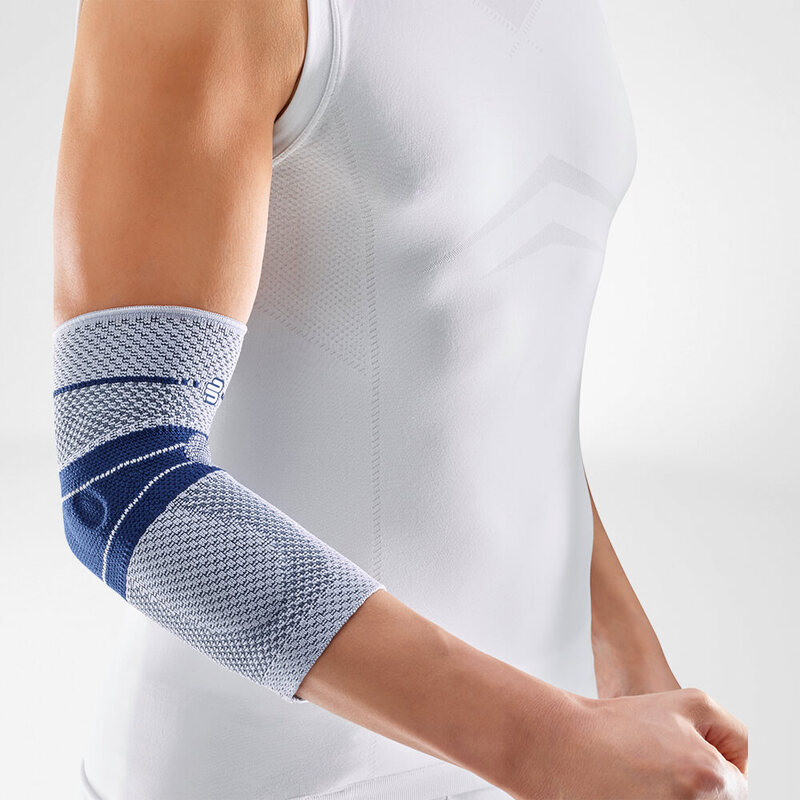
EpiTrain Elbow Brace
Best for daily use, Bauerfeind’s EpiTrain elbow brace features soft, lightweight materials, medical-grade compression, and Epicon+ Pads to alleviate pain and inflammation related to golfer’s elbow.
- Medical-grade compression relieves pain and swelling
- Viscoelastic massage pads stimulate surrounding muscles
- Train knit fabric offers all-day comfort without limiting mobility
- Anatomical design for secure fit during movement
- EpiTrain Forearm Strap add-on provides advanced relief and support
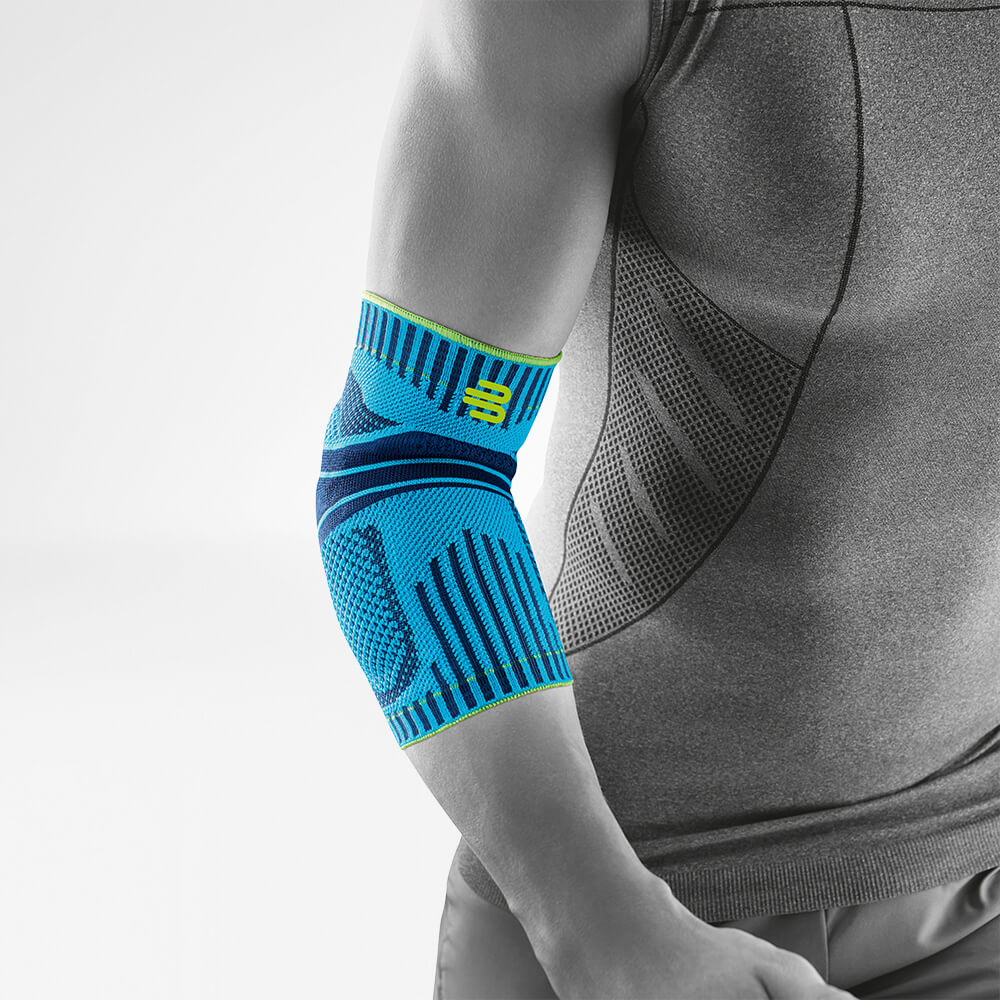
Sports Elbow Support
Best for athletic use, the Sports Elbow Support’s AirKnit fabric is extra breathable and moisture-wicking for lasting comfort during activity. Targeted Compression Zones and Dual Pads support and relieve the elbow joint.
- Supports the elbow to prevent excessive strain
- Targeted Compression Zones reduce elbow pain and swelling
- Dual Pads on each side of the elbow stimulate muscles
- AirKnit fabric is extra breathable and moisture-wicking Available in four colors and six sizes
Frequently Asked Questions:
What’s the best treatment for golfer’s elbow?
Treatment options for golfer’s elbow will depend on the severity of your condition. Applying an ice pack around the area can help reduce acute pain and swelling. If you’re experiencing severe pain and stiffness, it’s best to rest until these symptoms subside.
Bauerfeind’s Sports Elbow Support and EpiTrain elbow brace are great for anyone experiencing golfer’s elbow because they combine targeted compression with two viscoelastic massage pads to stimulate your elbow muscles, reduce swelling and help the healing process. Each brace also features breathable, moisture-wicking materials for premium comfort during activity.
As always, please consult your health care provider to create and manage your recovery plan.
How long does golfer’s elbow take to heal?
Recovering from golfer’s elbow depends on the severity and how consistent you are following treatment. Mild to moderate cases often improve within two to three months. Severe cases can take three to six months, and while rare, may require surgery.
Tendons heal at a slower rate than muscle tissue, so rest and patience are a huge part of the treatment outcome. Returning to activity too soon is one of the most common reasons recovery stalls, but wearing a medical-grade brace, such as the EpiTrain, can help alleviate pain and swelling.
Does a brace or compression sleeve help golfer’s elbow?
Yes, since elbow braces and compression sleeves can significantly reduce pain, swelling and inflammation caused by golfer’s elbow.
Medical-grade braces are helpful because they offer moderate joint support during repetitive movements that cause golfer’s elbow, which reduces the pressure load on the tendon. Some braces, such as Bauerfeind’s EpiTrain, enhance proprioception for more controlled movement mechanics.
Can I wear an elbow brace or support while golfing?
Of course! Bauerfeind’s elbow braces are designed to enhance joint support, relief, and recovery during daily use and activity, including golf.
The Sports Elbow Support, in particular, features an extra-breathable, moisture-wicking knit fabric and an anatomical design that provides all-day comfort and a secure fit throughout every swing on the course.
What’s the difference between golfer’s elbow and tennis elbow?
Golfer's elbow and tennis elbow are similarly caused by repetitive stress on the elbow, leading to pain and swelling in the area. However, golfer’s elbow occurs on the inside of the elbow, while tennis elbow occurs on the outside of the elbow.
Symptoms of golfer’s elbow include pain and stiffness, and can result in tingling and numbness in the fingers. Symptoms of tennis elbow include pain, stiffness, and swelling, which can also result in a weakened grip, burning sensation, or pain when rotating the hand.
Although one is termed “golfer’s elbow” and the other “tennis elbow,” you can still experience golfer’s elbow from tennis and tennis elbow from golf. The moniker stems from medial epicondylitis, which often affects golfers, and lateral epicondylitis, which often affects tennis players.
This information is provided for general information purposes and should not be relied on as a substitute for medical advice, evaluation or care from a qualified and licensed health care provider. The information contained here is not to be considered a plan of care of physical therapy.